
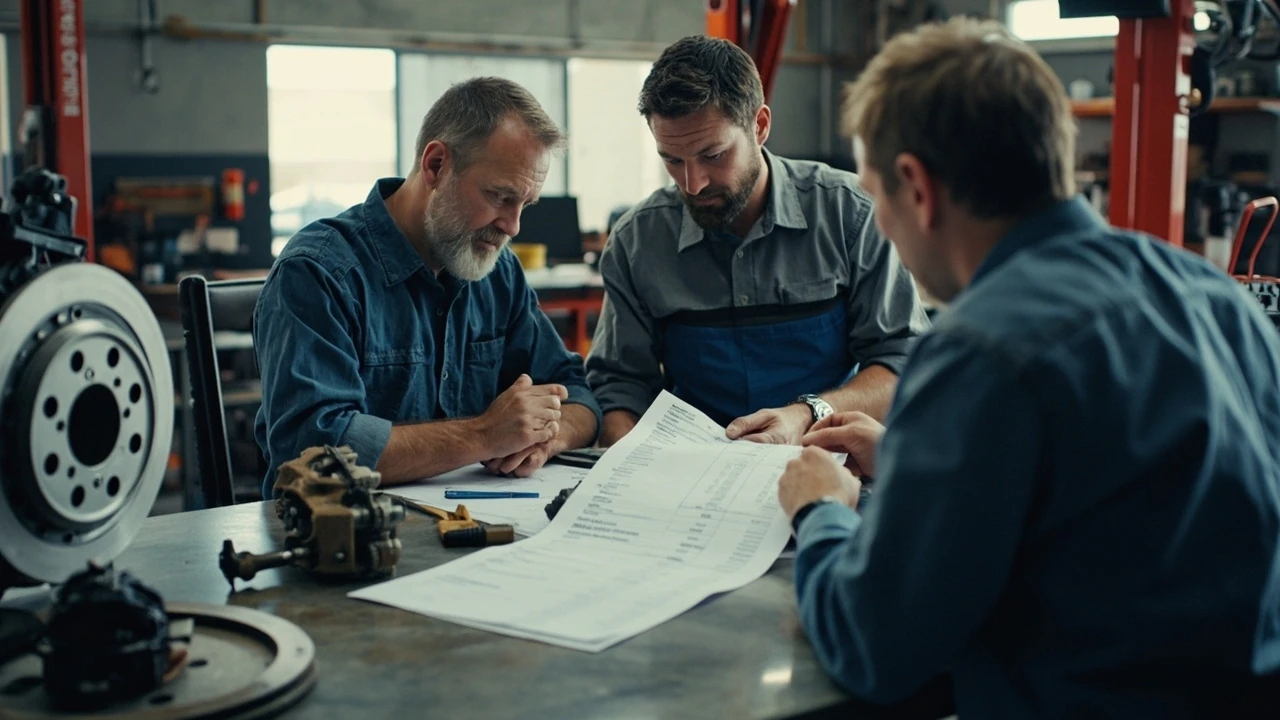
Where is the cheapest place to get brakes done?
Finding the cheapest place to get brakes done is not as simple as choosing the shop with the smallest number on its website. A low advertised price may cover only one brake pad, while the estimate you need could involve rotors, hardware, labor, wheel removal, and a brake fluid service. The best value usually comes from a shop that explains what your vehicle needs, charges a fair price for that work, and does not add parts or services without your approval.
The most affordable option depends on your location, vehicle, and symptoms. An independent repair shop may charge less than a dealership, while a mobile brake service can save money on towing or wheel transport. A discount brake parts store may offer inexpensive components, but the quality of installation still matters. Getting two or three comparable quotes is the most reliable way to separate a genuinely low price from an incomplete estimate.
Begin by asking for the same diagnostic work from every shop. If one business inspects the pads, rotors, calipers, hoses, and brake fluid, while another quotes replacement parts without an inspection, the prices are not directly comparable. A lower estimate is not better if it ignores worn hardware or unsafe components. Conversely, a higher estimate may be fair when it includes labor that another shop excludes.
Before booking, have your vehicle’s VIN, make, model, year, and approximate mileage ready. Also note whether the shop will inspect all four corners, whether diagnostic fees apply, and whether the quoted labor includes removing and reinstalling the wheels. These details prevent small differences from creating a misleading price comparison.
Your location matters, too. Shop labor rates, tax, part availability, and competition can vary substantially between neighboring cities. Searching for the lowest rate in a broad area may produce a shop that is inconvenient to reach or unable to handle your vehicle. A slightly higher quote from a nearby shop can be the better overall value if the work is completed promptly and the warranty is clear.
What makes one brake quote cheaper than another?
Brake pricing depends on the vehicle’s configuration and the condition of its components. Many front-wheel-drive cars use disc brakes on the front and either disc or drum brakes on the rear. Four-wheel-drive and performance vehicles may use larger, more expensive parts. A complete quote should identify the axle being serviced and distinguish parts that can be reused from parts that need replacement.
The labor line may cover a complete brake service, one caliper, or only the front axle. Some shops include rotor machining, hardware replacement, brake cleaning, and a fluid flush. Others quote those as separate items. A low estimate that lacks these details may not be a bargain if you need to return later for worn parts or contaminated fluid.
Discount parts are another common source of price variation. A shop may use economy-brand pads and remanufactured rotors while offering premium options at a higher price. There is no single “best” pad material. The right choice depends on the vehicle, driving pattern, manufacturer recommendations, and the shop’s ability to install and align the parts correctly. Extremely low prices deserve more scrutiny because labor is often a substantial part of the total bill.
Ask whether the estimate includes disposal or environmental fees. These charges can vary by shop and location, and some dealers charge more for paperwork, waste handling, or facility fees. A shop should itemize the final invoice so you can tell what was planned and what was actually replaced.
The timeline can also affect the cost. Rush service may carry an extra charge. If a vehicle is safe to drive and you can wait for a routine appointment, ask whether the shop offers a scheduled discount or a slower production slot. Do not use a low quote that requires leaving a vehicle for many days if you cannot safely defer the repair.
A transparent shop may not publish the absolute lowest number, but its estimate should make each included item understandable. Price is only one part of value. Correct diagnosis, safe workmanship, clear communication, and a written guarantee often prevent a more expensive repair from becoming the economical choice.
Where should you compare brake service prices?
Start with repair shops that serve your vehicle type and can perform the specific work required. Search for independent auto repair businesses, brake-specialty shops, mobile technicians, and dealerships within a practical driving distance. Read recent reviews for patterns involving clear estimates, punctual work, and accurate billing rather than focusing only on the total number of reviews.
Call each business with the same set of questions. Ask what diagnostic fee applies, whether it is deducted from the repair total, how labor is estimated, and which components are included. Request the estimate in writing through email, text, or the shop’s online system. A written record makes it easier to compare quotes and revisit questions before authorizing work.
| Shop type | Where it may fit best | Questions to ask | Possible cost advantage |
|---|---|---|---|
| Independent repair shop | Drivers wanting a broad inspection and straightforward service | Is the estimate itemized? Are parts new, remanufactured, or economy grade? | Competitive labor and fewer dealer-specific charges |
| Brake specialty shop | Drivers seeking focused brake diagnosis or repairs | Do you service my drivetrain and brake configuration? Is the diagnostic fee refundable? | Efficient workflow when brake work is the main need |
| Mobile brake service | Drivers unable to move the vehicle or wanting added convenience | What travel, diagnostic, or service-call charges apply? Are parts sourced locally? | May avoid towing or customer transportation |
| Dealership | Drivers with warranties, recalls, or manufacturer-specific requirements | Is there a campaign or courtesy repair? Will the estimate use OEM parts? | Access to vehicle-specific records and original components |
| Discount parts retailer with installation | Drivers comfortable choosing parts who need installation | Are labor, machining, hardware, and warranty included? | Potential savings on parts when the installation terms are clear |
Do not compare a mobile service with a shop using only the advertised base price. Include travel charges, diagnostic fees, shop fees, and part availability in the comparison. Do not assume a dealership must be more expensive; an authorized repair under warranty, a service campaign, or a straightforward pad replacement may still produce a competitive final price.
For a second opinion, give each shop the same facts. Mention any grinding, squealing, pulsation, pulling, fluid leak, or warning light. If your vehicle has an existing estimate from another business, disclose it. Honest shops can explain whether the proposed work is reasonable and whether any safety item was overlooked.
How to compare itemized brake service quotes
A useful quote separates diagnosis from parts and labor. When you receive it, check whether the shop identified the axle, rotor condition, pad condition, and whether any hardware or fluid work is included. If the estimate simply says “brake service,” ask for clarification.
| Quote item | What to verify | Questions that expose missing costs |
|---|---|---|
| Diagnostic labor | Inspection time, testing, and whether the fee applies to the final repair | Is this credited toward the repair? What does the inspection include? |
| Brake pads | Axle, quantity, material grade, and manufacturer or aftermarket source | Does the price include hardware, shims, and installation? |
| Rotors or drums | Minimum thickness, condition, machining, and replacement option | Why replace this component? Can it be safely resurfaced instead? |
| Caliper hardware | Bolts, clips, pins, and wear items that may rust or deform | Are one-time-use or corroded parts included? |
| Brake fluid | Type, quantity, moisture test, and whether a flush is included | Is the fluid service part of the brake quote or an add-on? |
| Wheels and tires | Removal, installation, torque, lug torque checks, and road-test needs | Will damaged lug nuts, caps, or sensors also need attention? |
| Shop fees | Facility, disposal, environmental, tax, and parts charges | Which charges are unavoidable and which were estimated? |
Do not assume a thicker rotor is automatically better. The service should use components that meet the vehicle’s requirements and fit correctly. Likewise, a manufacturer recommendation for brake fluid does not mean every fluid change must include a full flush. Ask what condition the fluid is in and what the shop found during testing.
When a quote includes an unexpected part, ask what evidence supports replacement. A rotor might be within the usable thickness limit but have an unusual surface, while a visibly rusted caliper slide may need service even if the pad is not yet thin. The technician should be able to connect the recommendation to a measurement, inspection finding, or vehicle requirement.
Write down the total estimate, the refundable deposit, and the authorized maximum. Approve changes only after the shop contacts you. A good quote also states the warranty, whether it covers parts and labor, and what happens if a related problem appears soon after the repair.
When should you stop shopping for the lowest price?
Some For additional context, brake symptoms are signals to limit the scope of the comparison. If the pedal feels soft, the vehicle pulls strongly, fluid is leaking, a brake hose is damaged, or a wheel is no longer secure, the priority is safe diagnosis rather than finding the lowest bid. Continuing to drive may damage components that were still usable and create a larger repair.
Grinding often means a friction material has worn beyond its intended service life. Squealing can have several causes, including a worn pad, a glazed surface, or a hardware issue, so the sound alone does not identify the exact repair. Pulsation when braking may involve rotor variation, thickness concerns, mounting issues, or something else found during inspection.
If the brake warning light remains on, the vehicle may have a monitoring system that needs diagnosis even when the pads do not look extremely thin. Do not rely on the warning light alone; some wear conditions develop without a dashboard alert. For context on related vehicle clues, see why a car that shakes when accelerating can sometimes indicate a brake or road-wheel concern rather than an engine problem.
Do not pressure a shop to omit a safety item simply to reach a target total. That creates a false economy. Instead, ask whether the item can be monitored, repaired separately, or scheduled later if the technician confirms it is not immediately required. A sound independent shop will distinguish urgent work from preventative maintenance.
Safety also depends on installation. Pads, rotors, calipers, hoses, and hardware must be compatible with the vehicle. A low-priced part that does not fit properly is not a savings option. Likewise, skipping required torque checks, wheel fastener replacement, or a road test can reduce value even if the invoice is lower.
Can you save money by doing part of the brake work yourself?
Some owners shop for pads, rotors, or a DIY brake replacement kit to reduce parts costs. This can be sensible for a mechanically experienced driver with the correct tools, safe workspace, lifting equipment, and a way to support the vehicle securely. It can also create higher costs if seized hardware must be replaced, a rotor is damaged during removal, or the vehicle will not pass a road test after assembly.
Buying parts yourself does not remove labor entirely. Even when a vehicle is supported safely, brake work involves wheel removal, caliper access, hardware inspection, clean assembly, correct piston retraction, brake-bed-in procedures where appropriate, wheel installation, and final checks. Certain vehicles also require electronic parking brake service, special tools, or procedures for floating calipers.
A middle path may be more practical. Let the shop perform the inspection and labor while allowing the customer to supply compatible parts. Confirm before purchase that the business will honor its installation warranty with customer-supplied components. Some shops refuse this arrangement or charge more because they cannot guarantee the part’s condition or provenance.
- Confirm the exact part numbers, material specification, quantity, and included hardware.
- Ask whether the shop will install customer-supplied parts and what warranty applies.
- Verify whether machining, fluid service, hardware, and wheel removal are included in labor.
- Confirm that incompatible or discontinued parts can be returned without affecting the labor price.
- Keep receipts, packaging, and warranty documents in case a component is defective.
Do not attempt a brake job with inadequate lifting equipment or without knowing how to support the vehicle safely. The weight of the car and the force stored in the brake system are not appropriate for improvised methods. If the work is outside your experience, professional installation is usually the cheaper risk management decision.
Which type of brake shop offers the best value?
The best-value provider depends on what problem you have. A brake specialist may be efficient when the warning light requires diagnosis, fluid replacement, or a straightforward pad-and-rotor service. An independent general repair shop can be useful when the symptoms may involve suspension, steering, wheel bearings, or another system. A dealership can be preferable when warranty coverage, recalls, electronic brake modules, or manufacturer procedures are involved.
Mobile brake service deserves careful consideration when the vehicle cannot be driven. Even if the on-site labor fee is higher, it may cost less than towing plus the loss of a work vehicle. Confirm that the technician can perform the full repair where the vehicle is parked. Mobile work may require a level, clean, accessible area and enough room to remove wheels safely. Some complex jobs still require a lift or shop bay.
Discount parts stores may appeal to price-conscious owners, but the package must include more than the box. The useful comparison is the all-in price for compatible parts, installation, rotor machining, hardware, fluid, and warranty. A low parts price cannot offset an unclear installation price or a return visit for a part that was damaged during installation.
Ask every provider whether the estimate includes a road test and whether the business will explain the completed work. The final invoice should identify the parts installed, labor performed, and any items not completed. For example, if the shop replaced pads but did not replace a rusted slide pin that requires machining, you should receive an accurate invoice and a clear explanation rather than a vague statement that “the brakes were done.”
Location can be decisive when two quotes are close. A nearby shop may charge slightly more yet reduce towing, transportation, lost work time, and the risk of postponing a safe repair. Consider the complete cost of the visit, not only the workshop line on the estimate.
Reports on changing brake-pad materials also illustrate why material choice is not always a simple budget decision. A BBC article about greener brake pads explains that new materials and emissions-related requirements can affect product cost. That does not mean premium pads are necessary for every vehicle, but it does support the broader point that cheap components and advanced material choices are different parts of the market.
How do you verify a brake shop before authorizing the repair?
Verification should happen before the work begins, not only when you collect the vehicle. Look for a physical location and a working phone number. Review the shop’s warranty, hours, payment methods, and service policies. For larger work, ask whether the business carries appropriate liability coverage and whether technicians hold relevant automotive certifications or complete manufacturer-specific training.
Certifications can help assess competence, but no single badge replaces a proper inspection. Ask what diagnostic tools the shop uses and how the technician checks pad thickness, rotor condition, fluid, leaks, caliper operation, and brake hardware. On a modern vehicle, electronic brake information may also be useful, but a physical inspection remains necessary.
- Compare written estimates that describe the same repair and the same components.
- Ask the shop to explain which findings made each recommended part necessary.
- Confirm who will perform the work and whether the repair carries a written warranty.
- Review the authorization limit, payment policy, and estimated completion time.
- Ask how the shop handles a failed part or a related finding discovered after work begins.
- Request an itemized final invoice and keep it with the maintenance records.
At pickup, review the invoice with the technician if possible. The parts listed should match the work discussed, and the repair order should show that requested items were completed. If the shop recommends another repair, ask whether it is urgent, what happens if it is deferred, and whether returning later would cost more. You can schedule a separate estimate if no immediate safety issue exists.
After leaving the shop, drive cautiously while the new brake components bed in according to the shop’s instructions. Keep the area around the wheels clean and monitor vibration, noise, pedal feel, or fluid leaks. If the vehicle pulls, shudders, or feels abnormal, contact the shop promptly. A small adjustment issue may be easier to address soon after installation.
For a broader view of how brake symptoms can overlap with other vehicle systems, review the site’s guide to auto suspension repair. Understanding where one system ends and another begins can help you ask better questions without assuming every sound comes from the pads.
Frequently asked questions
Is an independent brake shop cheaper than a dealership?
Often, yes, but not for every vehicle or repair. Independent shops may charge less for routine brake work because they have lower overhead or offer more parts choices. The dealership may be more competitive when a vehicle has applicable warranty coverage, a recall, free service checks, or work requiring manufacturer-specific access. Compare the full written estimates rather than relying on shop type alone.
How much should brake pads and rotors cost?
There is no single US price that applies to every vehicle. Prices vary by axle, pad material, rotor type, vehicle size, labor rates, and local competition. A safe estimate should separate the pads, rotors, labor, hardware, brake fluid, and shop charges. Ask for the total in writing and confirm whether replacement or machining of the rotors is included.
Is it cheaper to replace only the brake pads?
Replacing only the pads may cost less when the rotors are within safe thickness limits, have an acceptable surface, and are permitted to be reused. It may not be the safest or most economical option if the rotors are worn, warped, contaminated, or below the required thickness. A technician should inspect the rotors before deciding, and you should ask for the reasoning behind any replacement recommendation.
Can I save money by buying brake parts myself?
Buying parts can reduce the parts portion of the bill, but labor and safe installation remain necessary. Check the exact specifications and confirm that the shop will install customer-supplied components before buying anything. Ask how the warranty changes when you provide the parts. If the vehicle requires specialized procedures, tools, or electronic parking brake service, professional installation may be the better value.
What is the cheapest safe way to replace brakes?
The cheapest safe approach is usually to obtain two or more detailed quotes from qualified local shops, ask about a mobile service if transportation is difficult, and choose clear workmanship rather than the smallest headline price. Keep the scope consistent across quotes. Confirm compatible parts, complete labor, itemized fees, a written warranty, and approval requirements for additional work.
Is a mobile brake service cheaper than a repair shop?
Not always, but it can be cheaper overall when the vehicle cannot be driven and towing would cost money. Mobile service may include travel or call-out fees, and some repairs require a shop bay or lifting equipment. Ask about the total price, available equipment, replacement-parts costs, and whether the technician can complete the full repair at the vehicle’s location.
Do I have to replace all four brake pads at once?
Many shops replace pads by axle because brake balance and wear can differ from side to side. The best practice depends on the vehicle, the amount of remaining material, and the manufacturer’s procedures. If one pad is close to the limit, replacing the matching set on that axle may prevent another visit soon. Have the shop inspect all corners and explain what condition each side is in.
Why would a shop replace rotors when my brakes were only squealing?
Squealing does not automatically require rotor replacement. The noise may come from the pad material, a glazed friction surface, or a hardware issue. Rotors may still need replacement if they are below minimum thickness, badly damaged, cracked, or unsafe to reuse. Ask the technician for a measurement or inspection finding that supports replacing them.
Should I choose premium brake pads over cheaper pads?
Choose the pad specification that fits the vehicle and driving conditions rather than assuming the most expensive product is always best. Higher-priced pads may offer quieter operation, different dust characteristics, or materials suited to different use patterns, but they must be compatible and properly installed. Ask what the quoted pad material is and why it is appropriate for your vehicle.
What should I do if I cannot afford the full brake estimate?
Explain the situation to the shop and ask it to separate safety-critical work from items that may be scheduled later. Do not authorize a repair that leaves the braking system unsafe. Ask about payment plans, warranty work, mobile service, towing options, or a staged repair plan. A reputable shop can help prioritize urgent needs without encouraging unnecessary work.
Leave a Reply